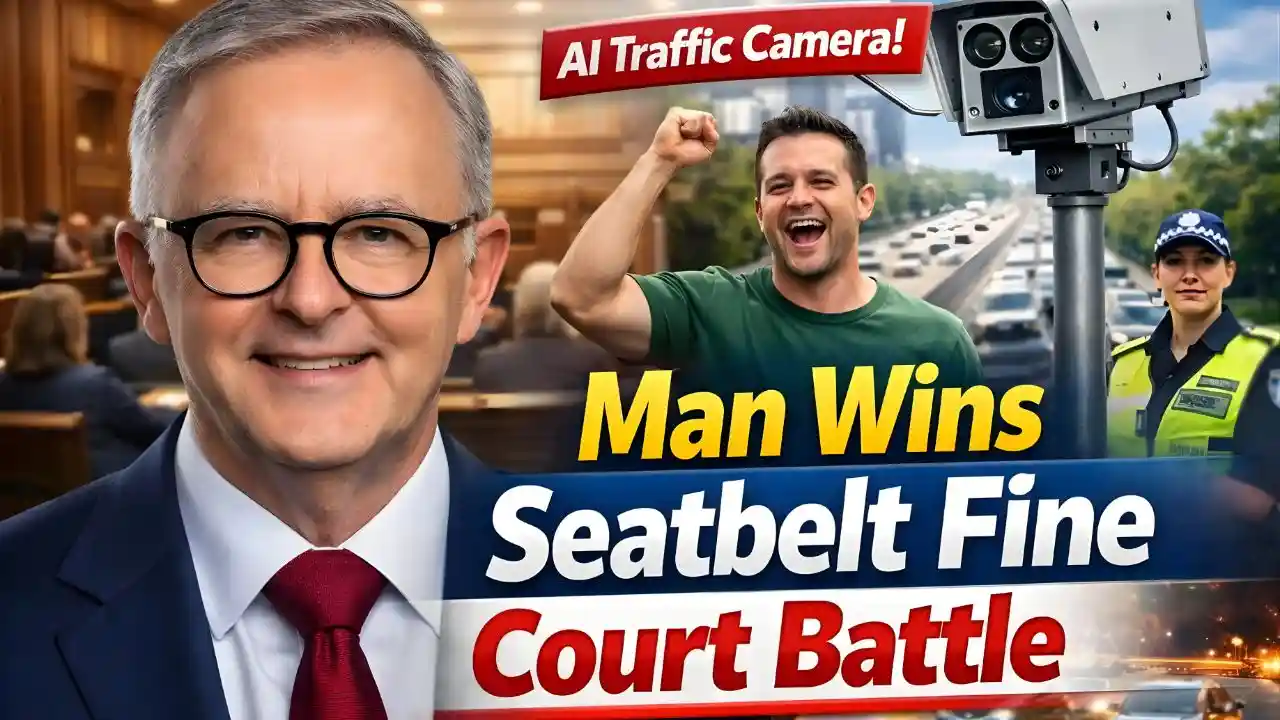
A distinctive challenge was then made in Australia, after a man got away with challenging a fine issued on the-based camera for not wearing seatbelts. At the center of this issue is the rise of artificial intelligence in speeding the process of surveillance and strict penalties for road safety violations.
Domestic authorities have introduced new technologies designed to capture offenses like mobile-using and seatbelt features. All enforcement systems are based on artificial intelligence systems to analyze vehicle images and issue a penalty automatically upon detecting any possible accompanying violation.
The Disputed Seatbelt Fine
In this specific case, the driver was fined because a traffic camera took issue with his alleged disregard for wearing a seatbelt. However, the driver challenged the fine in court, believing that the camera had misunderstood the image.
After examining the evidence, the court sided with the defendant, finding that the image supplied did not clearly show the alleged offense. Consequently, the infringement was annulled, pointing out the necessity of establishing the credentials of automated enforcement decisions before they are put through.
Growing Application of AI in Road Safety Enforcement
AI-based traffic cameras aimed at enhancing road safety have been introduced by mini states in Australia in recent times. These cameras are programmed to identify risky behaviors, including drivers talking on mobile phones or not wearing seatbelts.
The main reason for justifying the use of automated enforcement is the idea that road rules can be enforced more consistently and at higher speeds. Since such systems work continuously and cover multiple lanes, violations can indeed go unnoticed.
The possibility of AI traffic monitoring technology’s faulty functionality has been the subject of scrutiny yet again in the aftermath of the court decision made. The view held by a number of critics is that although AI-driven systems may be efficient, mistakes still occur, particularly where pictures are involved.
Issues like shadows, clothing, seatbelt placement, and objects in the car may confuse automated detection systems. Consequently, experts stress the importance of a human assessment and proper evidence validation before a fine decision is made.
Summary: What You Should Know as A Driver
Drivers should learn their rights in case they feel that they are issued an incorrect traffic ticket. Someone who has received a fine they feel is unfair needs to decide whether to ask for a review or to dispute the penalty in a court of law.
So as AI continues to muscle its way in road safety, it is seen from this case that courts are still crucial to ensure fair and appropriate application of penalties.