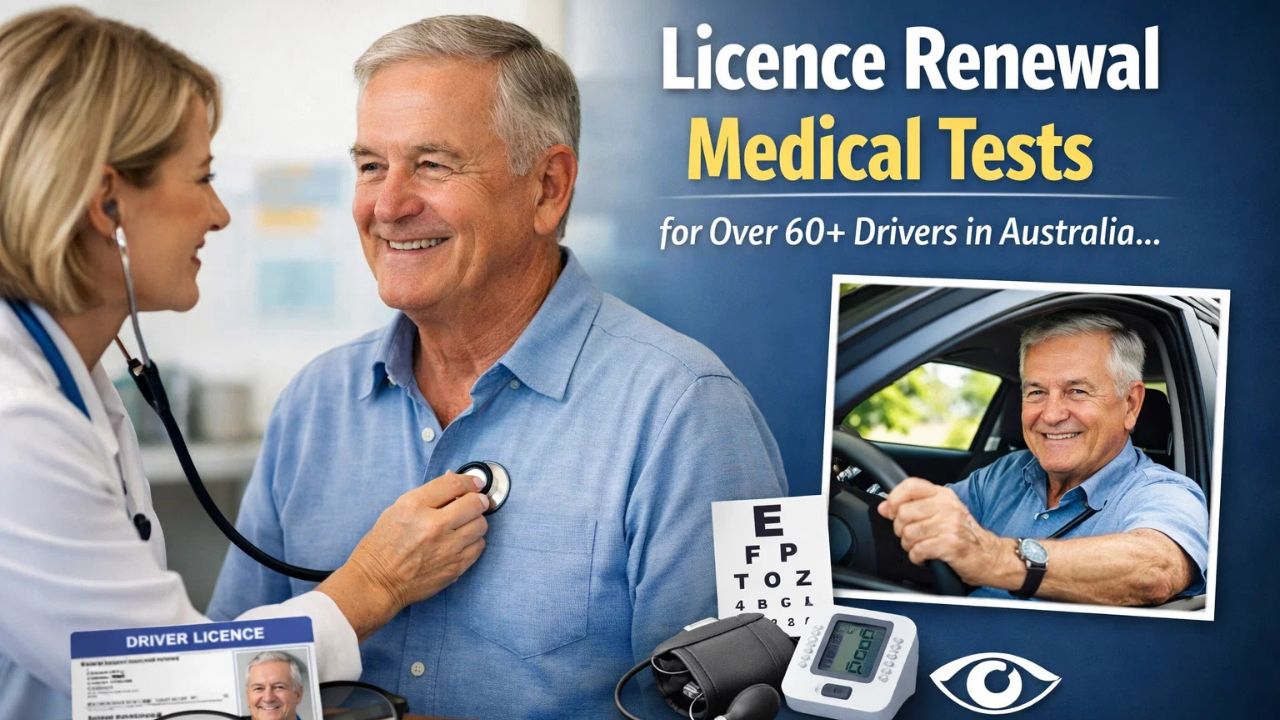
In Australia, driving licence renewal rules change gradually with age, but there is a common confusion about whether drivers aged 60 and above must undergo medical tests. This article explains in a clear and simple way what rules apply after 60 and when medical tests become necessary.
Do Drivers Over 60 Need a Medical Test
The most important point is that turning 60 does not automatically require a medical test in Australia. Drivers between the ages of 60 and 69 can usually renew their licence through the standard process if they are in good health.
A medical test is only required if a driver has a health condition that may affect safe driving. This can include conditions such as heart disease, diabetes, poor vision, or neurological issues. In such cases, a doctor may need to provide a fitness-to-drive certificate.
What Changes After Age 70
As drivers reach around 70 years of age, some states introduce additional checks. These may include self-declaration of medical fitness or shorter licence renewal periods.
However, even at this stage, a full medical test is not always mandatory unless there are health concerns or specific licence types involved, such as commercial or heavy vehicle licences.
Medical Requirements After Age 75
In most parts of Australia, medical assessments become more important after the age of 75. Drivers are typically required to obtain a medical certificate from a registered doctor each year.
The doctor evaluates the driver’s overall health and determines whether they are fit to continue driving safely. If everything is satisfactory, the licence is renewed, although sometimes with certain conditions or shorter validity.
What Is Checked in a Medical Test
The purpose of the medical test is to ensure road safety. During the assessment, several key areas are examined.
Vision is tested to confirm that the driver can see clearly. Hearing ability is also reviewed. In addition, the doctor evaluates reflexes, mobility, and cognitive functions such as memory and awareness.
If the driver is on medication, its effects are also considered to ensure it does not impair driving ability.
Rules for Drivers Aged 80 and Above
For drivers aged 80 and above, the rules become stricter in some states. Annual medical assessments are generally required, and in certain situations, a practical driving test may also be recommended.
This helps authorities ensure that the driver can still respond safely in real traffic conditions.
Additional Checks After Age 85
After the age of 85, some states impose even stricter requirements. Licences may be renewed for shorter periods, and regular driving tests may be required.
These measures are introduced to maintain safety for both the driver and other road users.
Differences Between States
Australia does not have a single nationwide rule for licence renewal at older ages. Each state and territory has its own regulations.
Some states require earlier or more frequent medical checks, while others only require them if a health issue is identified. Therefore, it is important to check the specific rules that apply in your state before renewing your licence.
Latest Trends and Updates
In recent years, Australian authorities have increased their focus on road safety for older drivers. This has led to more emphasis on regular health monitoring and medical certification.
Shorter renewal periods and closer involvement of doctors in assessing fitness to drive are becoming more common across different states.
Conclusion
Drivers aged 60 and above do not need to worry, as there is no automatic requirement for a medical test at this age. However, as age increases, especially after 75, medical assessments become a regular part of the licence renewal process.
Maintaining good physical and mental health is the key to continuing to drive safely. As long as a driver is fit, licence renewal can be completed without major difficulties.